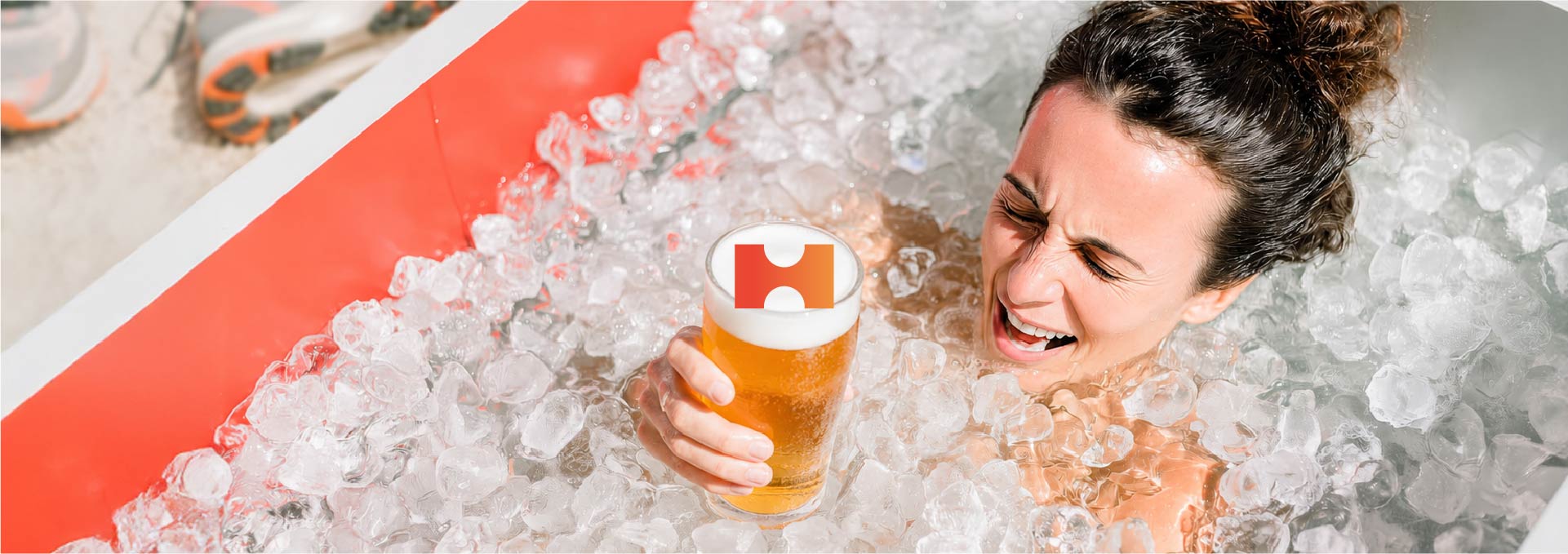
It’s a Saturday in London. You’ve just finished a ski erg, a row and a sled push. Your heart rate is somewhere it shouldn’t be. A nightclub DJ has been playing the entire time, and you’re sweating under world-class soundscapes and light production. In 20 minutes you’re about to get into an ice bath, Jubel in hand.
Metrix is an emerging fitness event that signals a new kind of wellness taking shape. One that is fundamentally changing how young consumers are approaching food and drink.
For the last decade, wellness culture has operated on a simple but exhausting premise: optimise everything. Eliminate the bad, maximise the good. The result was a generation of consumers who knew their macros, tracked their sleep, and felt guilty about a glass of wine. Health became a performance of discipline. Enjoyment became something you had to earn.
Then came the backlash.
The Rebellion
Gen Z drinking rates, which had been falling, are ticking back up. Smoking is making an unlikely cultural reappearance. Charli XCX handed an entire generation a permission slip with “Brat” – messy, hedonistic, unapologetic. The aesthetic wasn’t just a music moment; it was a collective exhale. An entire cohort saying: we tried the optimisation. It made us anxious and boring. We’re done.
But the rebellion didn’t end here – something else was born of it. A generation that has looked at both extremes and rejected them both, now building something in the middle. Not wellness as discipline, not hedonism as defiance. Both. At the same time.
The clashing of worlds
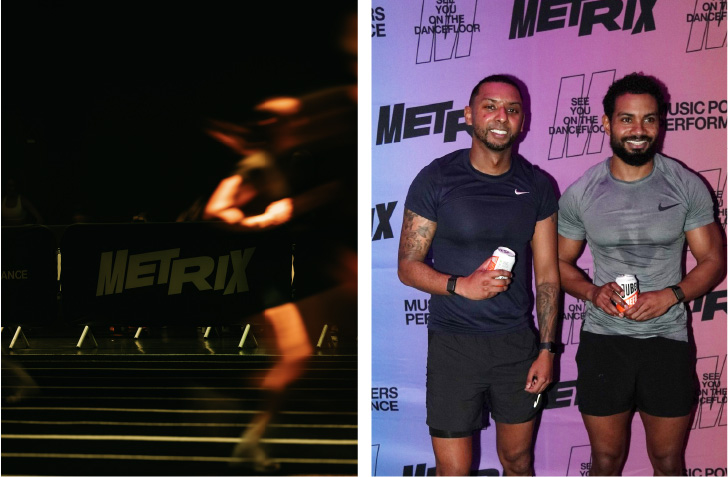
Metrix is where wellness and hedonism, discipline and indulgence, meet without apology. Working pairs move through five workout stations. Recovery and social spaces are built into the day as equal in value to the competition. You come to perform. You stay for the people.
It was born from the Hyrox generation, but it didn’t start there. 1Rebel spent years making high-intensity exercise feel like a social event rather than a chore – nightclub energy, curated playlists, the gym as a place you actually want to be. Run clubs are surging - Strava reported a near-quadrupling of new clubs in 2025 - with the post-run pint increasingly inseparable from the fitness itself. London City Runners opened their own craft beer pub on the Bermondsey Beer Mile. The run and the pint aren’t competing. They’re part of the same plan.
The Jubel effect
Metrix’s brand partners make this shift explicit.
Take Jubel. It started at the euphoric après-ski finish line moment: a drink that sits between effort and celebration. Lower in sugar than a fruit cider, fewer calories than a Corona, a social 4% ABV. Better for you, but built for the moment. Its tagline – “Dangerously Refreshing” – tries hard to reclaim “dangerous” as a feeling rather than a warning: the après feeling, canned, giving a generation sold on restriction and discipline the exhilaration of letting go. The occasion changes. The feeling doesn’t.
Meanwhile, Lucky Saint, already known for its non-alcoholic lager, has launched a lime and sea salt electrolyte version. A sports recovery product and a beer; it rehydrates and it socialises. Beer remains the world’s most social drink, and this one now comes with added benefits that suit changing lifestyles.
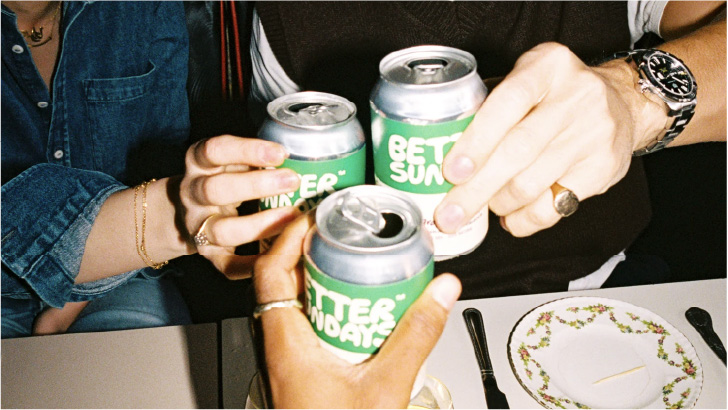
This collision has been building across categories. Hard kombucha – functional, fermented, alcoholic – emerged in the US as a category that shouldn’t exist by the old binary logic: it’s a wellness product and a drinking product simultaneously. Better Sundays is bringing the same idea to the UK: organic kombucha, live cultures, 3% ABV. In their words, healthy hedonism in a can. The name collapses the disciplined weekday self and the social weekend self before the product is even opened.
The performance of “both”
Whilst the US offers a blueprint, the translation isn’t always guaranteed. Take Poppi and Olipop. Both are prebiotic sodas that speak the language of function, but are culturally consumed like treats: bold, optimistic brand worlds of brightly coloured cans, nostalgic flavours, and fridge-stocking rituals photographed as lifestyle moments. Whether that lands in the UK is an open question – Liquid Death is a cautionary tale in how what works in the US doesn’t always resonate with a UK consumer. Either way, a universal premise rings true - the act of drinking these sodas says: I care about my health, but I’m not denying myself pleasure. The collapse of the binary, made visible in a can.
We signal this through what we wear, too. The same Adanola leggings that go to Pilates go to bottomless brunch. As the brand puts it: meet your everyday uniform, whether you’re running, running errands, or running late. Activewear used to have a context, but wearing wellness isn’t aspirational anymore. Now it’s just Tuesday.
And then there’s what we eat. Highsnobiety’s Status Economy report put it plainly: everything is wellness now, even if it isn’t really “good” for you anymore. Matcha started as a ceremonial wellness product. Now it’s a calorie-loaded layered sugar drink, posted as a wellness moment. The acai bowl followed the same arc – antioxidant-rich superfood to granola-loaded dessert, shared as proof of a considered life.
When we order these things, we’re not confused about whether they’re healthy. We’re communicating something about who we are: considered but not precious, wellness-literate but not consumed by it. These are status signals. Identity markers. What looks like contradiction is actually coherence. We’re not optimising. We’re treating ourselves – and we’ve stopped feeling bad about it.
Where is the joy?
Pushing hard and recovering well aren’t opposites, but part of the same intention. Metrix proves it by giving them equal weight. Underpinning all of this is something optimisation culture forgot: Joy.
The fitness world has spent years moving in the opposite direction. The manosphere’s version of wellness – monk mode, cold plunges at 4am, the body as a machine – stripped out everything human in pursuit of performance. Feeling good wasn’t important. Performing invulnerability was.
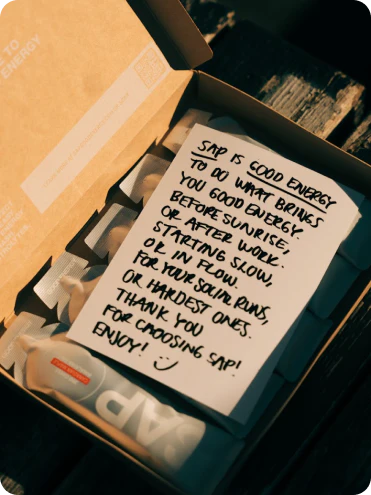
SAP Good Energy is a direct counter. A high-performance running gel built on natural ingredients – organic Canadian maple and Himalayan salt – with a refreshingly human tagline: fuel you’ll actually enjoy, not force down. Its mission? Fuel your “good energy”: Doing the things you love with the people you love. Founder James Warnock openly advocates for men’s mental health, talking candidly about grief and vulnerability while running. In a space the manosphere has claimed as its own, SAP is reframing what high performance looks like. The message isn’t push harder. It’s feel better, fully.
Jubel’s name makes the same argument. It means “a feeling of extreme joy”. Not optimisation, but experience. Metrix put it simply: “we wanted to promote serious and genuine athleticism but at the same time, we want people to enjoy themselves.” Joy isn’t the reward at the end. It’s embedded in the whole experience.
What this means for brands
Occasions are no longer owned by one category.
You can’t plant a flag in “the weekend” or “the gym” anymore– the boundaries between occasions are blurring. Our needs and desires don’t sit still. We know this is uncomfortable for established brands built around owning a moment, but we move fluidly between states, and we want brands to move with us. Not by being everywhere, but by being intentional and flexible about where you show up. A clear identity travels. An owned occasion doesn’t.
Permissibility is being redefined.
We’re not asking “is this healthy?” We’re asking “does this fit the version of myself I’m building?” The good/bad binary is gone. Health-washing is obvious. We choose brands that are honest and precise.
Community is the product.
We want brands that genuinely belong in the room with us. The question isn’t how they show up, but whether they should - and why? If you can’t answer the second question, the first one doesn’t matter.
We build our identities through consumption.
We curate our brand choices the way previous generations curated their music taste. The Metrix partner set - Jubel (alcohol-adjacent); Healf (wellness retail); Celsius (energy); Cano Water (hydration) - paints a portrait of a person: someone who trains hard, socialises without self-destructing, and makes considered choices without being precious about them. Being the right brand in the right room with the right people is worth more than mass visibility.
We want it all
The wellness binary isn’t collapsing because we care less about our health, but because we’ve developed a more nuanced relationship with what health actually means. It means the ice bath and the Jubel. The matcha latte and the matcha dessert. Training hard and socialising over a pint.
Joy. Community. Experience.
That’s what we want. We want it all. And we want brands that can give that to us. No judgement. No questions asked.
By Sophie Tyler, Strategy Intern